Compliance
The AICPA's New APS Proposal: A Distinction Without a Difference
The AICPA says the profit motive in a private equity owned audit firm is nothing special. Here is why its separate-firm structure is a distinction without a difference.
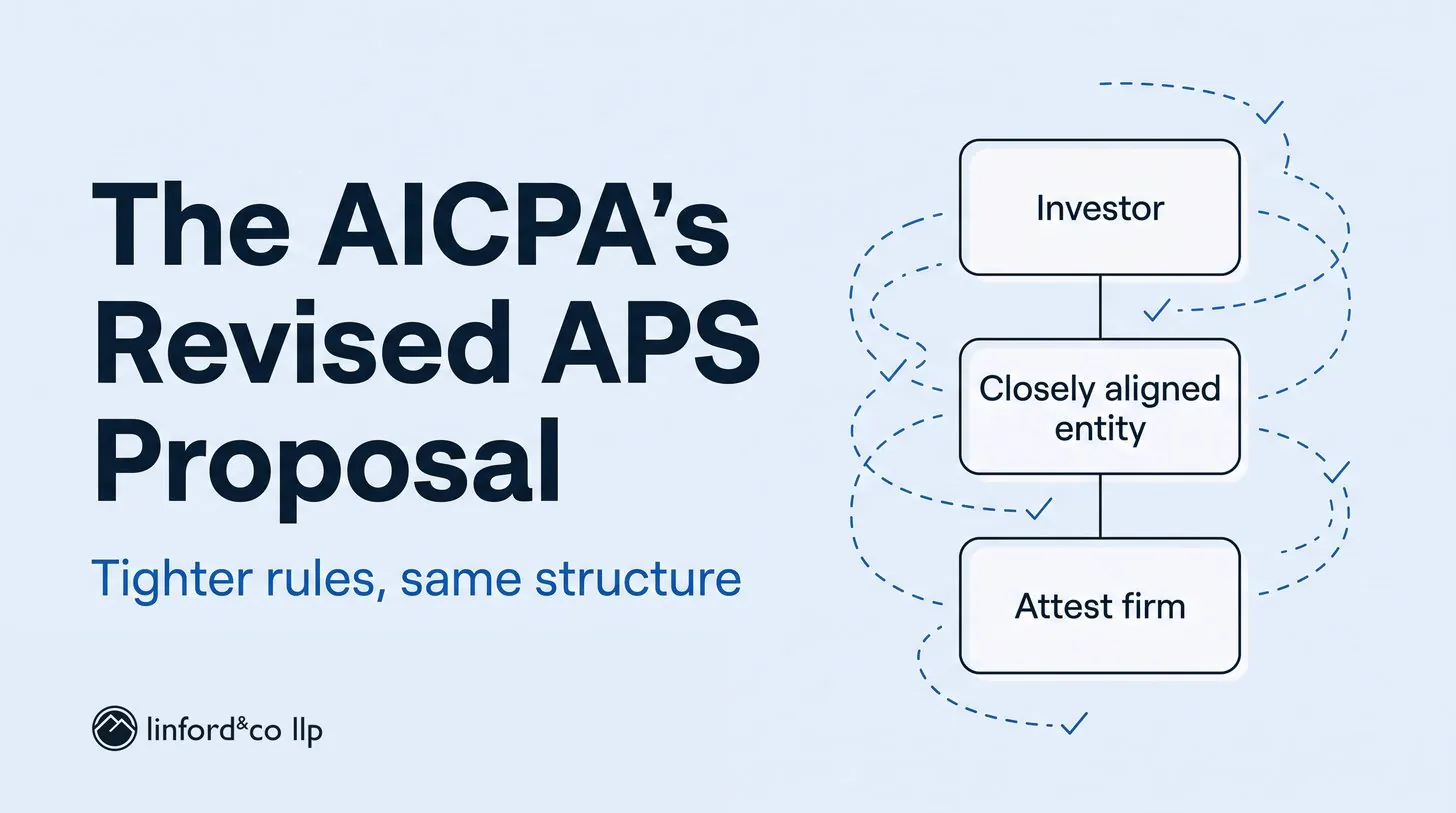
Every loan, every investment, and every signed contract in the largest economy in the world rests on a quiet assumption: that someone with nothing to gain looked at the numbers and told the truth about them. That someone is the auditor. Auditors do not sell software, steel, or sandwiches. They sell exactly one thing, which is independence. Take it away and what is left is an expensive opinion from a stranger.
So it is worth paying attention when the profession's own ethics committee works out how private equity investors can own the firms that employ the auditors, and then concludes the arrangement mostly needs better paperwork.
In Part 2, I walked through the diagrams the AICPA used to explain its first proposal on alternative practice structures (APS). On November 16, 2026, the AICPA's Professional Ethics Executive Committee (PEEC) re-exposed a revised proposal (opens in a new tab) after reading 81 comment letters. Comments are due March 16, 2027. Here is what changed, and why I think the profession should be far more alarmed than the proposal is.
The Diagrams Had to Go
The first proposal needed page after page of diagrams to explain who is allowed to own what, who must be independent of whom, and which boxes are colored which color. Commenters noticed. Some worried the diagrams would "suggest that the illustrated structures are required, exhaustive examples, or determinative of an APS."
PEEC's solution was to take nearly all of them out of the rule and keep one general picture.
I understand the drafting logic. But think about what it says. When the map of a structure frightens the people reading it, there are two ways to respond. You can simplify the structure. Or you can simplify the map. PEEC simplified the map.
The Profit Motive Is Apparently Nothing Special
This is the sentence every CPA should read twice. In the section on partner compensation, PEEC concluded that "incentivization structures, profit motive, commercial incentives, and growth acceleration are not unique to firms in an APS and therefore do not, by themselves, justify restrictions specific to an APS."
That is true in the same way that fire is not unique to arson. PEEC sees no difference where there is one, and relies on a distinction where there isn't.
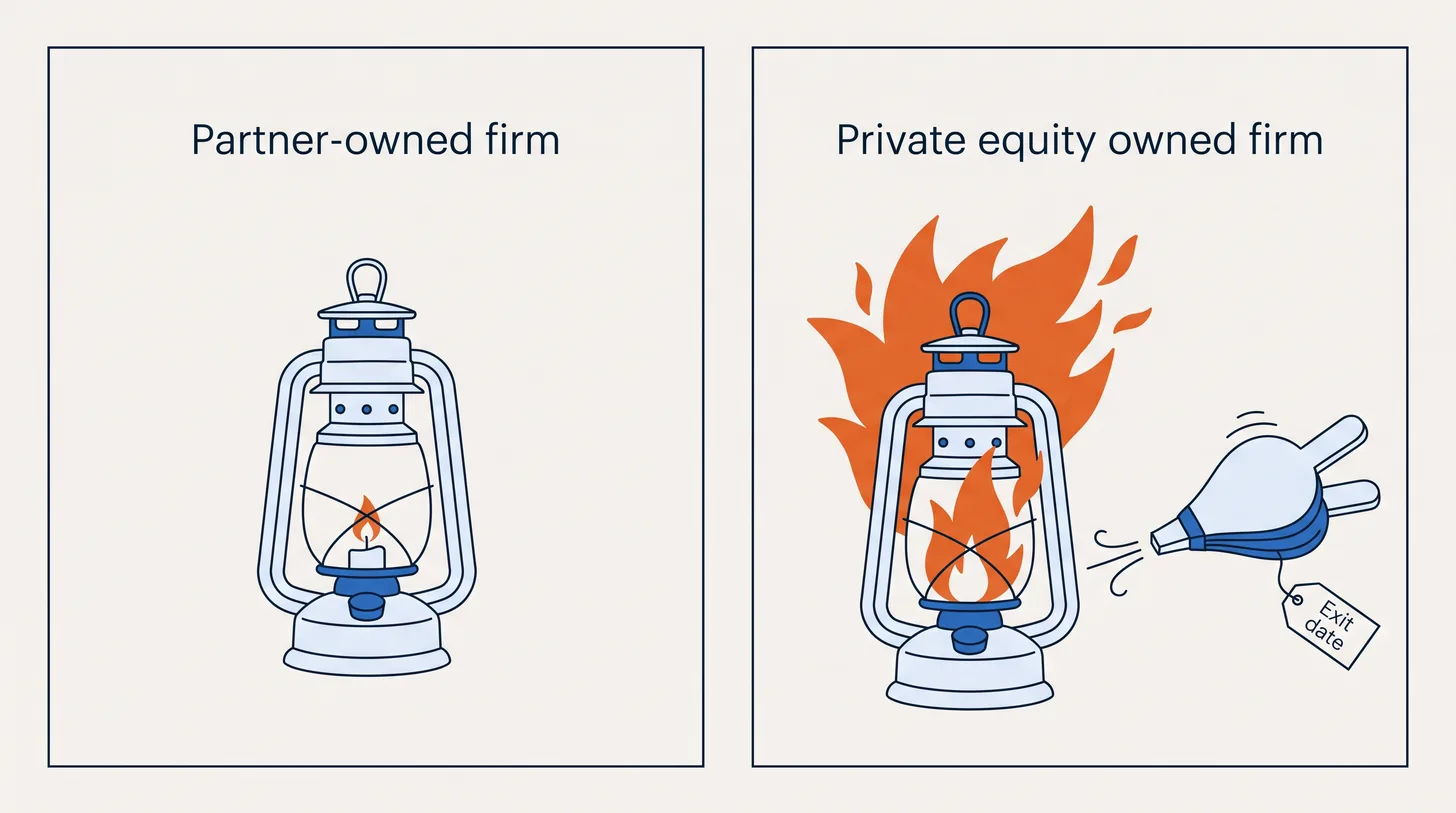
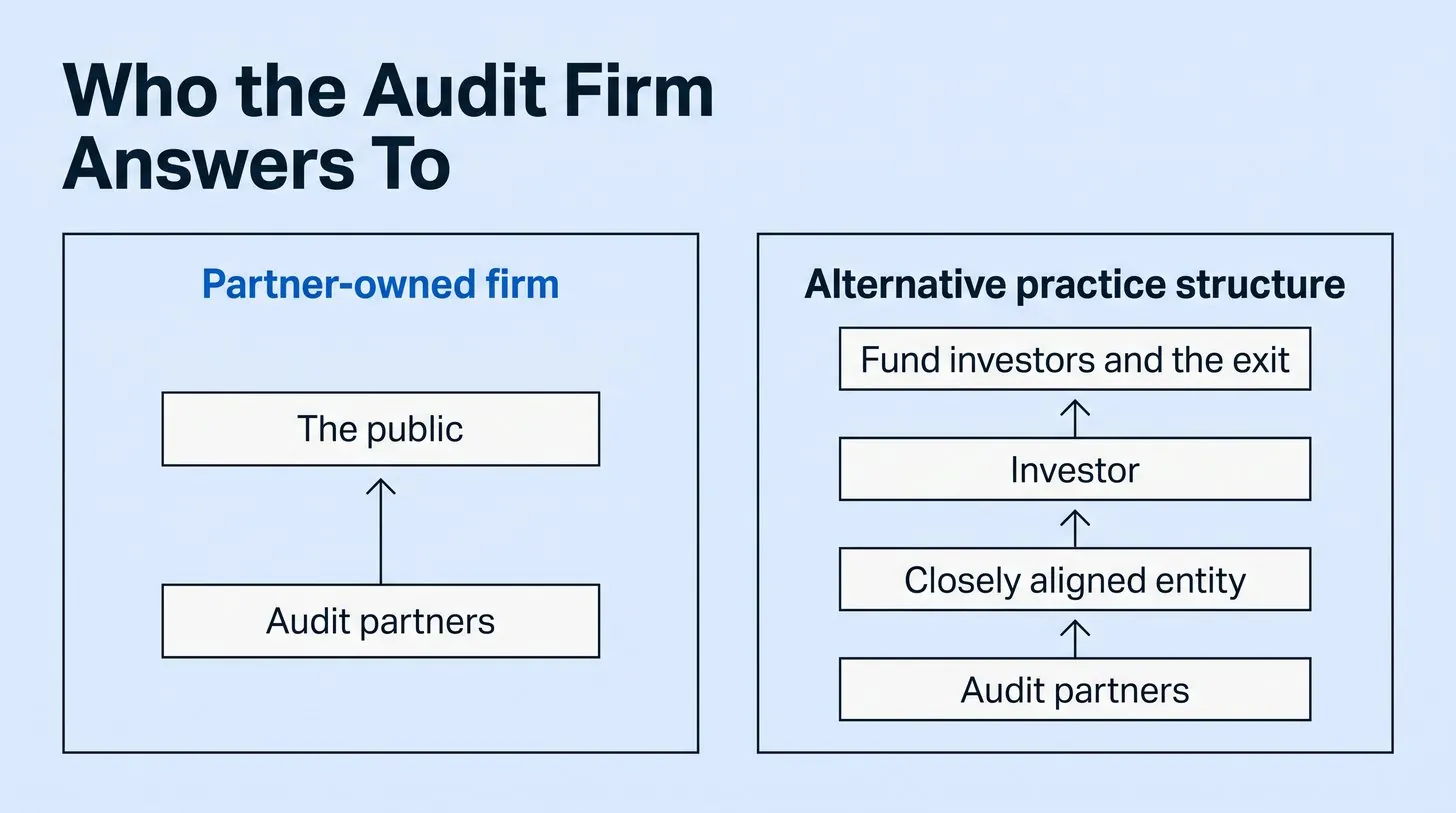
Of course every firm wants to grow. Ours does. The question was never whether a profit motive exists. The question is who owns it and what they need from it. In a partner-owned firm, the people who profit are the licensed CPAs who sign the reports, who answer to their state boards for them, and who have to live with them for the rest of their careers. In an APS, the profit belongs to an investor that bought in to sell out, for more, within the life of a fund. Its own investors expect a return. The audit partners' pay is set by a company that investor owns.
A private equity fund does not buy into an accounting practice because it has developed a deep personal love of professional skepticism. It buys in because it expects the practice to grow faster and be worth more when it sells. Every pressure an auditor is trained to resist (keep the client happy, keep the fee, keep the growth curve pointed up) now has an owner with a deadline.
PEEC's response is to list factors to weigh: whether the investor takes part in compensation decisions, whether the two governing bodies overlap, and whether audit partners report to the investor-backed company's leadership. Factors to weigh. Not prohibitions. The profession is being asked to evaluate, case by case, whether the people who set an auditor's pay might influence the auditor.
Peer-reviewed research has already looked. In a study published in The Accounting Review (opens in a new tab), researchers interviewed partners at PE-backed firms and found that firms largely keep a one-firm mentality despite the required separation, and that PE firms shape the attest practice's priorities through ROI targets, acquisitions, compensation, and client portfolios. The paper's title asks a question: "Selling Its Soul?" The revised proposal does not answer it.
The Walls Are Now Optional
The whole theory of an APS is separation. The CPA-owned attest firm signs the reports. A separate, investor-backed company employs the people and owns the offices. The first proposal described that separation as a characteristic of the structure, including separate governing boards and separate chief executives.
The revised proposal moves separate boards and separate CEOs into the list of things to consider. In PEEC's words, if the two entities "do not have separate governing boards or separate CEOs, that fact may create more significant threats to independence."
May. The firewall between the investor and the audit is now a factor. The structure's defining wall has become a suggestion box.
Separate on paper, optional in practice. That is a distinction without a difference.
Bright Lines Are Also Blueprints
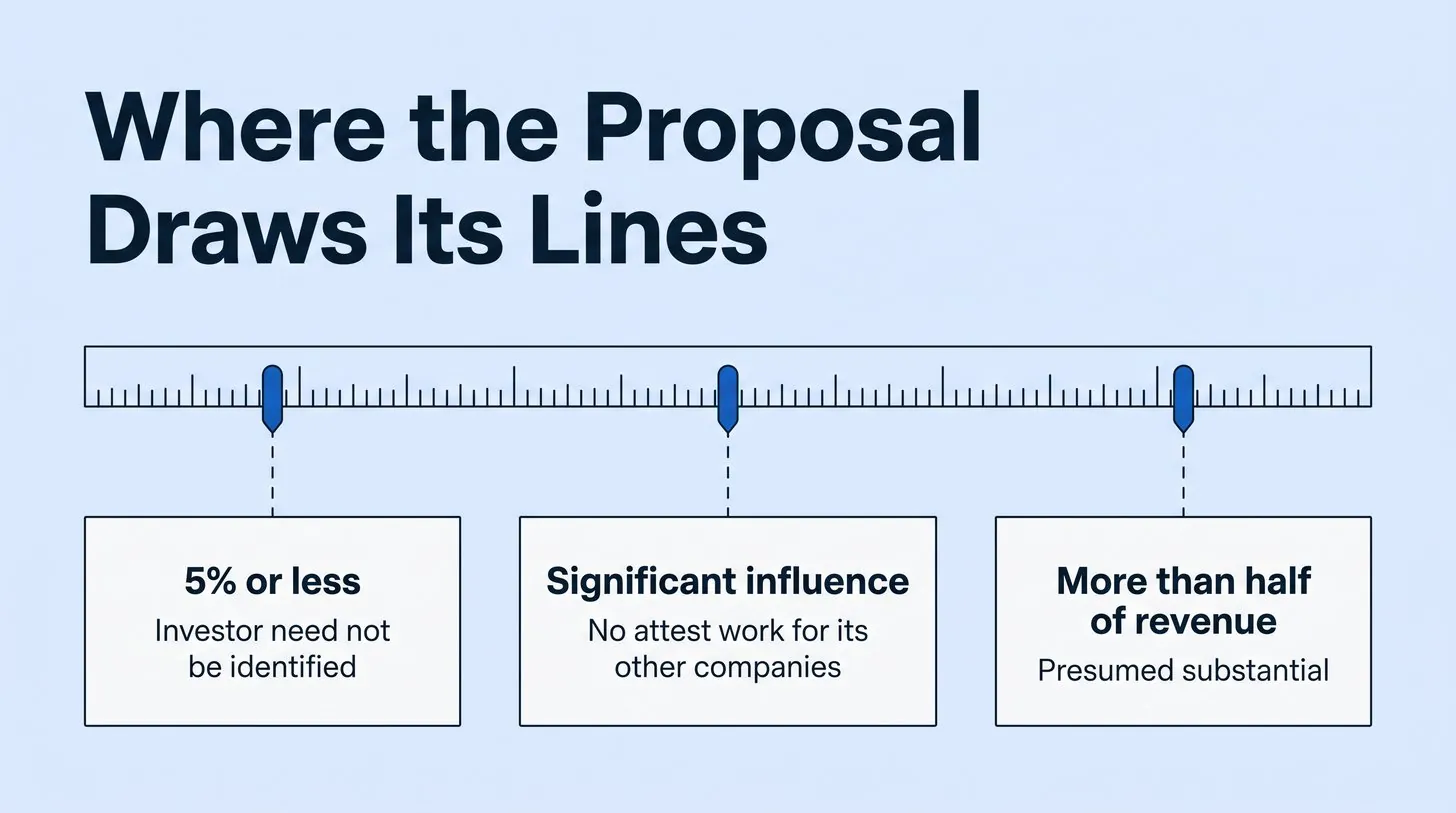
The revised proposal leans on thresholds:
- An investor with a direct interest of 5% or less need not be identified or evaluated, unless it has significant influence.
- An entity is "closely aligned" only if it receives a substantial share of the attest firm's revenue or similar benefit and is integral to its operations. More than a majority of revenue is presumed substantial, though that presumption can be rebutted.
- A structure is an APS only when the closely aligned entity has an investor.
Bright lines make rules easier to apply. They also tell deal lawyers exactly where to stand. Nothing focuses a structuring team like a published number. In its comment on the first proposal, KPMG, hardly a radical voice, warned that prescriptive fact patterns create "a roadmap for entities to organize in ways that allow them to avoid the consequences of independence requirements." Thresholds are the same roadmap with mile markers.
What the Client Gets to Know
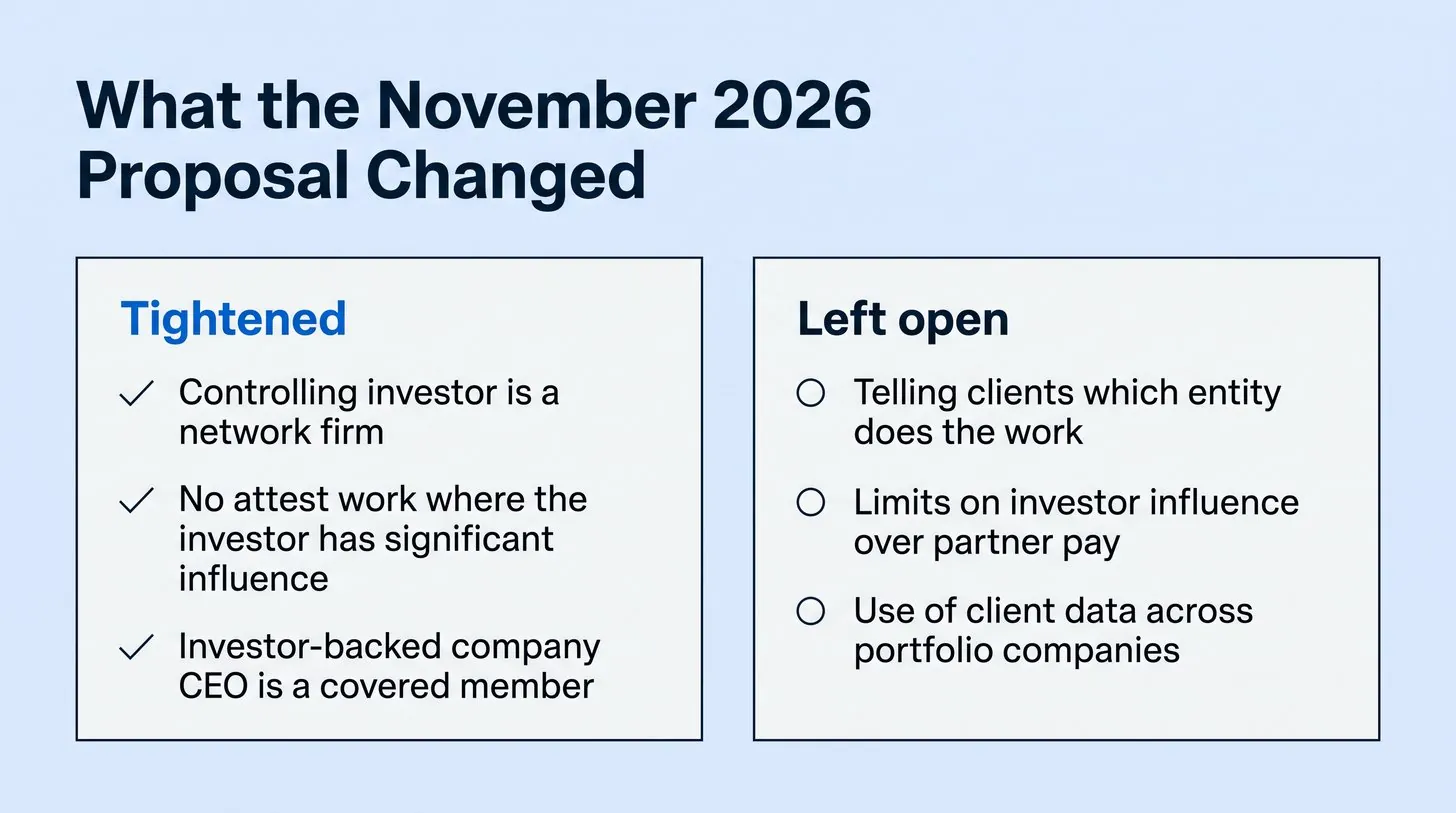
The first proposal would have required firms in an APS to make clear which entity performs each service. In other words, the client would be told which company actually did the work behind the report it hands to its lenders and customers.
Commenters were divided. So PEEC dropped it and listed it as a topic for future consideration.
If an industry has to debate whether to tell customers who did the work, the debate is the answer.
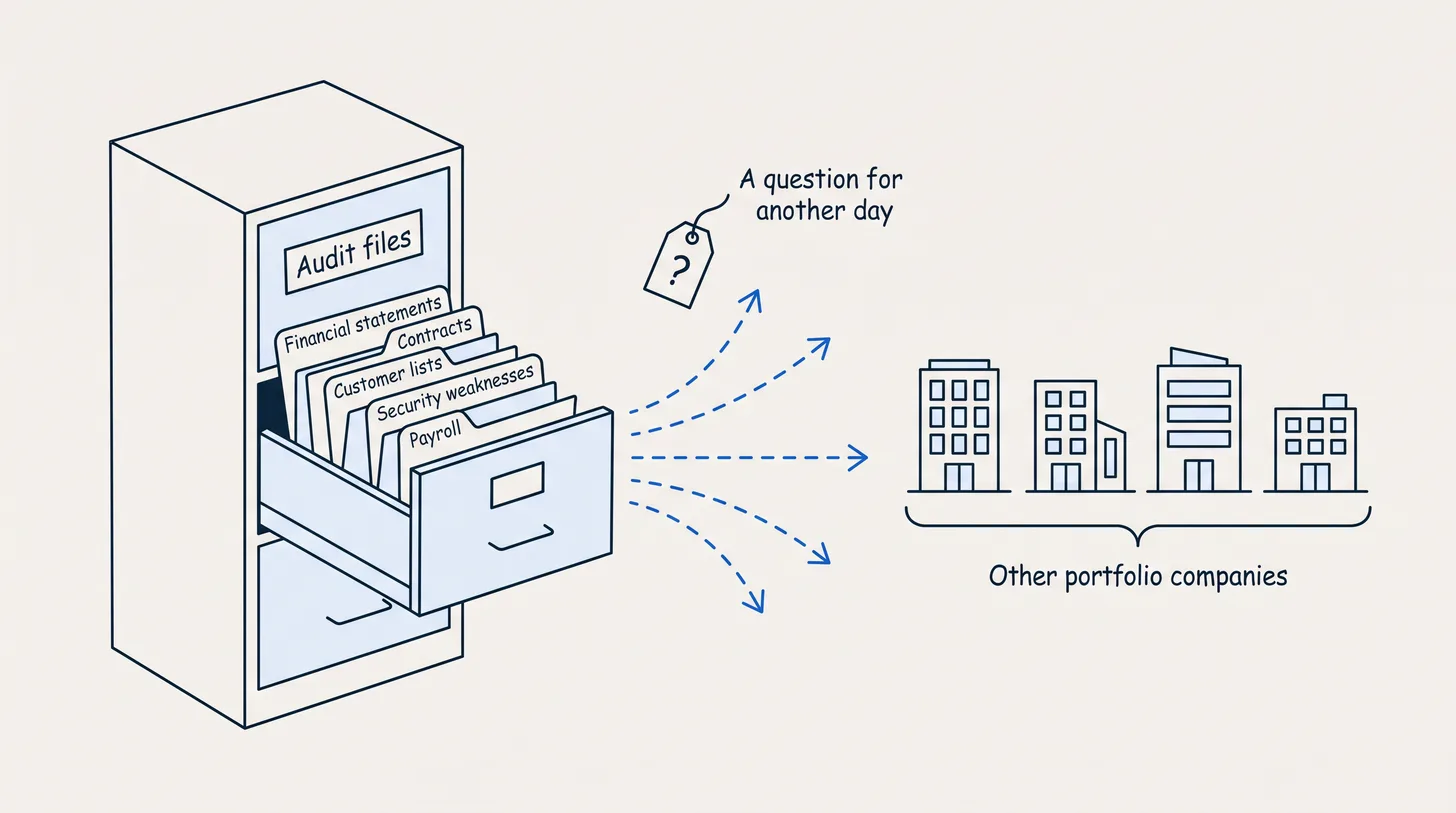
The same list of future topics includes whether an investor may use, aggregate, or share data obtained through the investor-backed company for the benefit of its other portfolio companies. Think about that for a moment. Audit firms see the financial statements, contracts, customer lists, security weaknesses, and payroll of the companies they audit. Whether a private equity owner may put that information to work across its portfolio is, for now, a question for another day.
Credit Where It Is Due
To be fair, the revision does tighten real rules, and one of them came from our own comment letter:
- A controlling investor is always part of the attest firm's network. The attest firm cannot audit or review the financial statements of that investor's other companies.
- A bright line across the portfolio. When an investor has significant influence over the investor-backed company, the attest firm cannot provide any attest service to other entities the investor significantly influences, regardless of materiality.
- More covered members. The chief executive of the investor-backed company is now a covered member, as are board members who decide a specific audit partner's pay.
These are the right changes. PEEC deserves credit for them. They also feel a little like thanking the landlord for installing a smoke detector after renting the basement to a fireworks company.
Enforcement by Checklist
Many state boards of accountancy told PEEC the first proposal was too complex to enforce. The revised proposal answers with more material on peer review, including a centralized review committee and APS checklists. PEEC is careful to say peer review is not a substitute for enforcement by state boards.
So the structure is too complicated for regulators to police, and the plan is a more detailed checklist. When the controls around a structure keep growing faster than anyone's ability to test them, an auditor would call that a design problem. The profession should too.

What We Will Ask For
Richard Rieben and I will comment again. Our letter will likely:
- Thank PEEC for treating a controlling investor as part of the network.
- Ask that independence in appearance be the test for the structure as a whole, not just for each relationship inside it.
- Support the state boards that urged that the attest firm not perform attest services for any entity in the investment structure.
- Ask PEEC to restore disclosure of which entity performs each service, ideally in the report itself.
- Ask that investor involvement in audit partner compensation be prohibited, not weighed.
- Ask for clear limits on using audit client data anywhere else in an investor's portfolio.
- Ask the AICPA to reconsider allowing alternative practice structures at all.
You do not need to be an AICPA member to comment. You only need to care whether audits mean anything. Comments go to ethics-exposuredraft@aicpa.org and are due March 16, 2027. If you sit on an audit committee, rely on audit reports, or lead a CPA firm, PEEC should hear from you.
Summary
The revised proposal is a careful, detailed, sincere effort to make an unsound structure a little less unsound. It tightens real rules. It also concludes that an outside owner with a growth target and an exit date is nothing special, makes the walls between that owner and the audit optional, and leaves clients guessing about who did their audit.
An attest firm that is independent on paper and owned in practice is a distinction without a difference, and a reasonable and informed third party would see it as one.
The AICPA did not invent private equity's interest in accounting firms. But it is the body that decides what the profession will accept, and it is choosing to accept this. Rules can name a threat. They cannot remove the reason it exists.
Almost every day a broker or a private equity backed company asks me whether we would consider selling Linford & Company LLP. My answer is always short. Linford & Company LLP is owned by its partners and has no outside investors, and it will stay that way. Read why we stay partner-owned.
Newel Linford wrote this post with help from AI and reviewed and approved every word. The views are his own.
Related services
SOC 2 Audits
Independent SOC 2 examinations covering security, availability, confidentiality, processing integrity and privacy.
All Services
SOC, HIPAA, HITRUST, FedRAMP, ISO, PCI DSS, CMMC and penetration testing from one independent firm.
Related articles
Compliance
What the AICPA's Own Diagrams Say About Private Equity in Audit Firms
Newel Linford · November 17, 2026
Compliance
How to Choose the Right VPN: What Auditors Look for in a Compliant Remote Access Environment
Megan Kovash · November 4, 2026
Compliance
Information Security Risk Management: What the Frameworks Say & What Auditors Actually See
John Pohlmann · October 7, 2026